Tidbits


GOVERNMENT

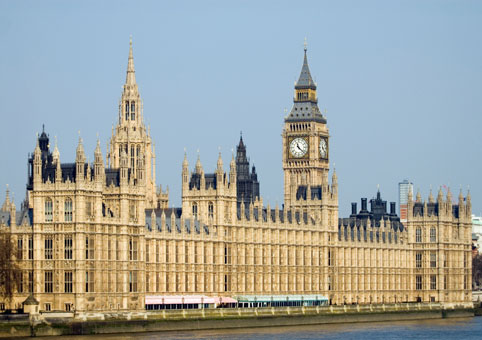
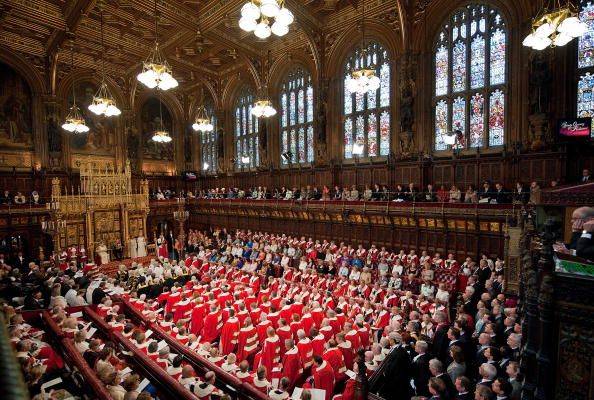
The United Kingdom is a constitutional monarchy and parliamentary democracy, with a queen and a parliament that has two houses: the House of Lords, with 574 life peers, 92 hereditary peers, and 26 bishops; and the House of Commons, which has 651 popularly elected members. Supreme legislative power is vested in parliament, which sits for five years unless dissolved sooner. The House of Lords was stripped of most of its power in 1911, and now its main function is to revise legislation. In Nov. 1999, hundreds of hereditary peers were expelled in an effort to make the body more democratic. The executive power of the Crown is exercised by the cabinet, headed by the prime minister.

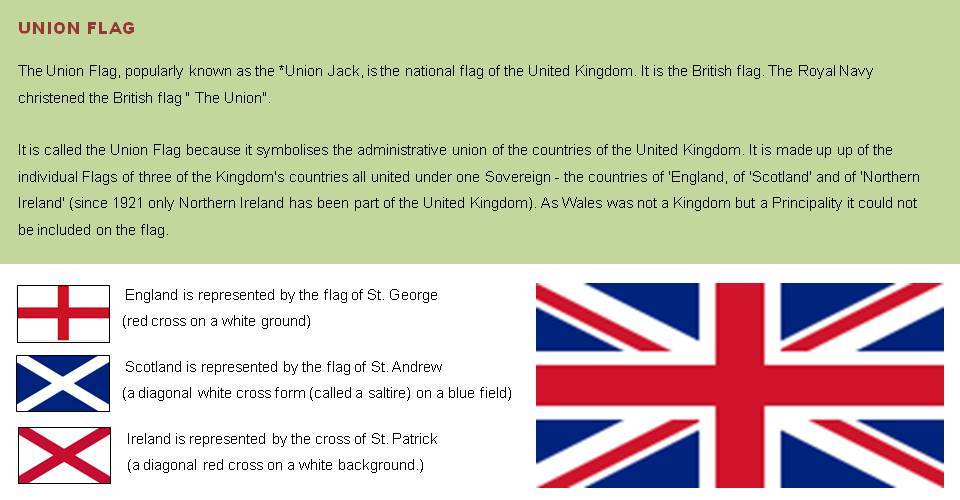
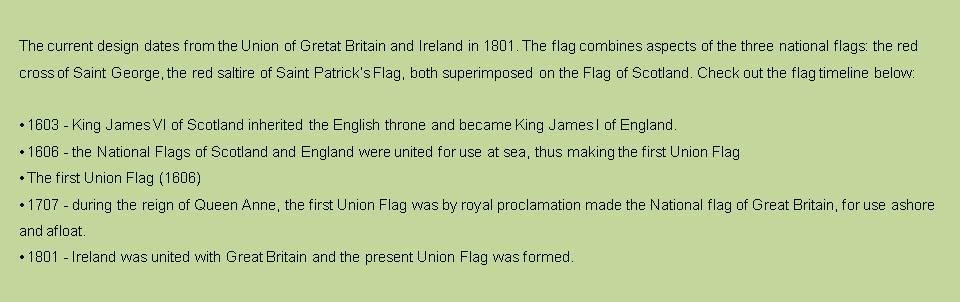
England has existed as a unified entity since the 10th century; the union between England and Wales, begun in 1284 with the Statute of Rhuddlan, was not formalized until 1536 with an Act of Union; in another Act of Union in 1707, England and Scotland agreed to permanently join as Great Britain ; the legislative union of Great Britain and Ireland was implemented in 1801, with the adoption of the name the United Kingdom of Great Britain and Ireland; the Anglo-Irish treaty of 1921 formalized a partition of Ireland; six northern Irish counties remained part of the United Kingdom as Northern Ireland and the current name of the country, the United Kingdom of Great Britain and Northern Ireland, was adopted in 1927.

Generally, a parliament has three functions: representation, legislation and parliamentary control (i.e., hearings, inquiries). 

BBC

The British Broadcasting Corporation (BBC) is a British public service broadcaster headquartered at Broadcasting House in the City of Westminster, London. It is the largest broadcaster in the world, with about 23,000 staff. Its main responsibility is to provide impartial public service broadcasting in the United Kingdom, Channel Islands and Isle of Man. BBC's services is not only limited to television, it also offers radio, internet, interactive television, commercial services, music and other miscellaneous ventures.

Broadcasting House in Portland Place, London, is the official headquarters of the BBC. It is home to three of the ten BBC national radio networks, BBC Radio 3, BBC Radio 4, and BBC Radio 4 Extra.

The principal means of funding the BBC is through the television licence, costing £145.50 per year per household since April 2010. Such a licence is required to receive broadcast television across Britain, however no licence is required to own a television used for other means, or for sound only radio sets (though a separate licence for these was also required for non-TV households until 1971). The cost of a television licence is set by the government and enforced by the criminal law. 

The BBC has the second largest budget of any UK broadcaster with an operating expenditure of £4.808 billion in 2011-2012.

CURRENCY

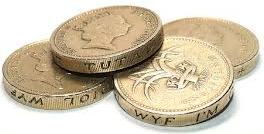
The pound sterling is the official type of money used in the United Kingdom. The pound is divided into 100 pence.

The pound got its name because it was the value of one pound (weight) of "sterling silver". This is why it is called "pound sterling". "Sterling silver" means mixed metal that has 92.5% or more real silver. The sign for the pound is £ which is similar to a capital L because libra is the Latin for pound. The symbol for pennies is "p" (pronounced "pee" like the letter). The British write 50p or £0.50 and say it "fifty pee".

Today's coins are 1 penny, 2 pence, 5 pence, 10 pence, 20 pence, 50 pence, £1 and £2. The notes are £5, £10, £20 and £50.

1 British pound = 1.6239 U.S. dollars
or 67.7584912 Philippine peso

MONARCHY

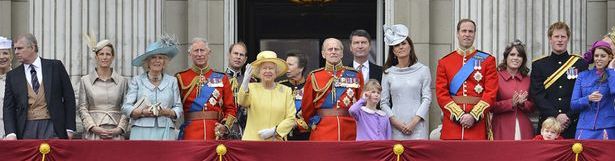
The British Royal Family is the group of close relatives of the monarch of the United Kingdom. The term is also commonly applied to the same group of people who are the relations of the monarch in her or his role as sovereign of any of the other Commonwealth realms, thus sometimes at variance with official national terms for the family. Members of the Royal Family belong to, either by birth or marriage, the House of Windsor, since 1917, when George V changed the name of the royal house. The new name chosen, Windsor, had absolutely no connection other than as the name of the castle which was and continues to be a royal residence.  

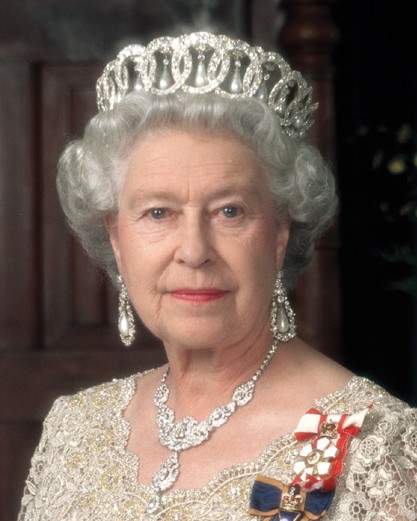
Here are 10 fun facts about Queen Elizabeth II.

1. The Queen has 30 godchildren.
2. Her childhood nickname was Lilibet because she couldn’t pronounce Elizabeth.
3. The Queen has owned more than 30 corgis (breed of dog) during her reign. One of her corgis mated with a dachshund belonging to Princess Margaret to produce a new breed called a dorgi. (She currently has four corgis and three dorgis…).
4. The Queen's robes were so heavy that at the start of her Coronation she asked the Archbishop of Canterbury to give her a push, saying “Get me started!”.
5. She has seen 12 prime ministers and six popes come and go.
6. In her reign she has answered some three million items of correspondence.
7. She has given around 90,000 Christmas puddings to staff.
8. Unusual live gifts given to her on royal tours include two tortoises and a seven-year-old bull elephant.
9. The Queen keeps a portable hook with a suction cup in her handbag so she can hang it discreetly under tables.
10. The Queen is the only person in Britain who is not required to have a passport


This free website was made using Yola.

No HTML skills required. Build your website in minutes.

Go to www.yola.com and sign up today!

Make a free website with Yola